

Contents
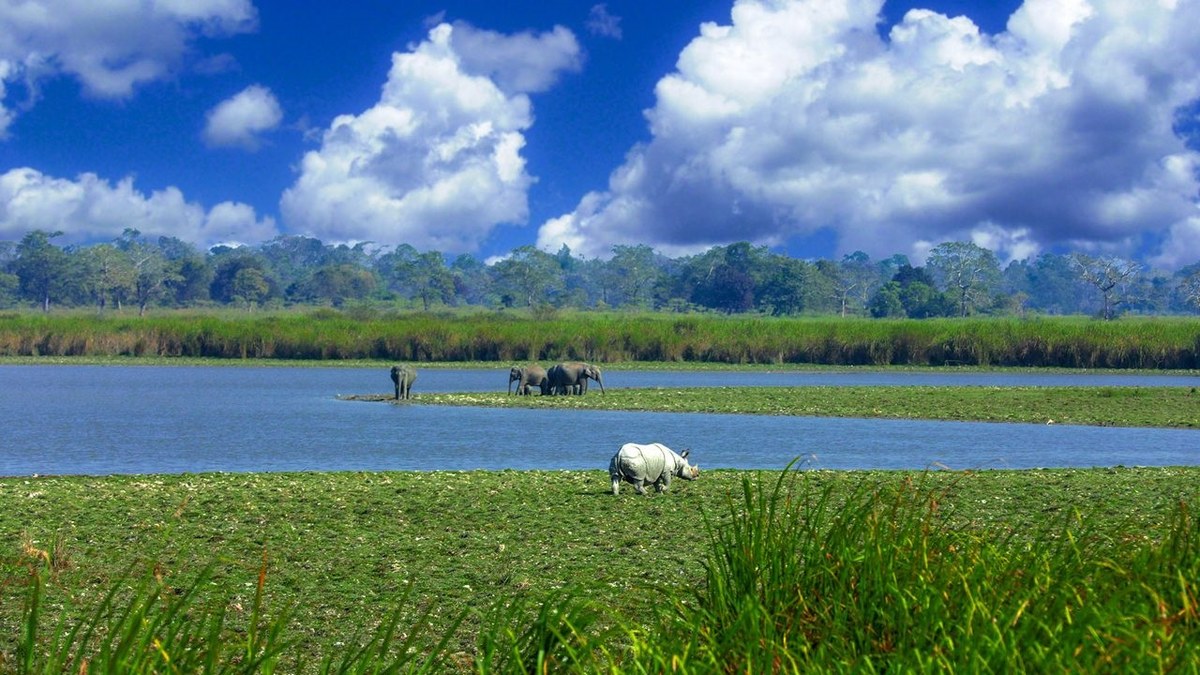
Kaziranga is more than a national park. It is a vast and changing floodplain landscape on the southern bank of the Brahmaputra, shaped each year by water, silt, grass and the movement of wildlife.
Most visitors come for the greater one-horned rhinoceros. Kaziranga is the world's most important stronghold for the species and one of the great conservation successes of modern India. But the rhino is only part of the story. Tigers, Asian elephants, wild water buffalo, eastern swamp deer, hog deer, bears and a remarkable variety of birds live in a landscape that is repeatedly reshaped by the Brahmaputra. UNESCO inscribed Kaziranga National Park as a World Heritage Site in 1985 under natural criteria (ix) and (x), recognising both its ecological processes and its exceptional biodiversity.
The park is also one of the largest remaining undisturbed representatives of the Brahmaputra Valley floodplain. Its ecology depends on change. Flooding is not simply a disaster that interrupts life here. It is one of the forces that has created and sustained the habitats on which Kaziranga's wildlife depends.
A landscape built by water
Kaziranga's grasslands, wetlands, beels and forest patches form a mosaic rather than a single unbroken wilderness. The Brahmaputra and its tributaries deposit silt, erode banks, create and alter water bodies, and change the shape of the land.
During the annual flood cycle, animals move as water levels rise. Grasslands and wetlands are renewed, while new channels and pools can appear. UNESCO describes these riverine and fluvial processes as one of the reasons Kaziranga has outstanding universal value. Wet alluvial grasslands occupy a large part of the World Heritage property and are maintained by natural flooding and other ecological processes.
This is why Kaziranga cannot be understood simply as a fenced wildlife attraction. Its animals need a wider landscape. During floods, wildlife moves towards higher ground, including areas outside the core protected habitat. Roads, settlements and human activity along the southern side of the park can therefore become major challenges, particularly when animals are forced to cross busy transport corridors.
The same floods that sustain the park can also create some of its most difficult moments.
The rhino and the conservation story
The greater one-horned rhinoceros is Kaziranga's most recognisable resident. Its recovery is also closely tied to the history of protection in the area.
At the beginning of the twentieth century, the species had been reduced to dangerously low numbers in Assam. Concern over the decline of the rhinoceros led to the creation of protected areas and, over time, stronger legal protection. Decades of conservation work transformed Kaziranga into the principal stronghold of the species.
Today, the Assam Forest Department describes the park as the home of more than 70 per cent of the world's one-horned rhinoceroses. UNESCO similarly identifies Kaziranga as the species' largest single stronghold and one of the most significant achievements in rhinoceros conservation.
The rhino, however, should not overshadow the rest of the ecosystem.
Kaziranga supports significant populations of Asian elephants, wild water buffalo and eastern swamp deer. It is also an important tiger habitat and has been part of India's tiger conservation framework since 2007. Its wetlands and grasslands support large numbers of resident and migratory birds, while the wider river system also provides habitat for species including the endangered Ganges river dolphin.
Four ranges, four different experiences
For visitors, Kaziranga is generally experienced through four main tourism ranges: Kohora, Bagori, Agoratoli and Burapahar.
Kohora, often called the Central Range, is the main tourism hub and the best-known base for many first-time visitors. Bagori, or the Western Range, is another major safari area with extensive grasslands and frequent wildlife sightings. Agoratoli, in the east, is particularly associated with wetlands and birdlife, while Burapahar offers a different mix of forest and landscape.
There is no guarantee of seeing a particular animal in any range. Kaziranga is not a zoo, and wildlife movement changes with weather, water, grass cover and season. The experience can differ dramatically between two visits to the same area.
The Assam Forest Department highlights jeep safaris, elephant rides and birdlife among the principal visitor experiences, along with views towards the Karbi Anglong hills.
Kohora remains the principal service centre, with many hotels, lodges, restaurants and transport connections located around the National Highway 715 corridor.
A park surrounded by people
Kaziranga's boundaries do not separate wildlife from human life as neatly as a map might suggest.
Villages, farms, roads and commercial activity surround parts of the protected landscape. Crop damage and human-wildlife conflict remain recurring concerns. During severe floods, animals moving towards higher ground face additional risks from roads and traffic.
UNESCO identifies several continuing management challenges, including poaching, riverbank erosion, invasive species, tourism pressure, highway traffic and livestock grazing in some areas. The organisation also notes the importance of maintaining ecological connections and managing pressures around the property.
This makes Kaziranga a working conservation landscape. Protection is not limited to guarding animals inside a park boundary. It involves managing the relationship between rivers, forests, roads, villages, tourism and wildlife movement.
Why Kaziranga matters
Kaziranga's international importance comes from more than its rhinos. It protects one of the most important remaining examples of a dynamic Brahmaputra floodplain ecosystem.
The annual floods, often viewed only through the language of destruction, are also part of the ecological system that sustains its grasslands and wetlands. The challenge for conservation is to protect that natural dynamism while reducing the dangers created when wildlife encounters roads, settlements and changing patterns of human activity.
For visitors, the attraction is immediate: a rhino standing in tall elephant grass, a herd of wild buffalo in open country, elephants moving across a wetland, or migratory birds gathered around a beel.
But Kaziranga is most interesting when viewed beyond the safari.
It is a landscape in motion. Water changes it. Wildlife responds to it. Conservation has altered the future of species that were once close to disappearing. And every year, the floodplain begins the process again.
Kaziranga at a glance
Location: Assam, India, on the southern bank of the Brahmaputra
UNESCO World Heritage Site: Since 1985
UNESCO criteria: (ix) and (x)
World Heritage property area: 42,996 hectares
Best known for: The world's largest population of the greater one-horned rhinoceros
Other key wildlife: Tiger, Asian elephant, wild water buffalo, eastern swamp deer, hog deer and numerous bird species
Main tourism ranges: Kohora, Bagori, Agoratoli and Burapahar
Landscape: Floodplain grasslands, wetlands, beels and forest patches
Tiger Reserve: Part of India's tiger conservation network since 2007
Visitor access and safari operations are seasonal and may change according to weather, flooding and directions issued by park authorities. Visitors should check current official information before making travel plans.
References
- https://assamtimes.org/article/green-cry-ngo-wants-steps-to-save-one-horn-rhino-in-kaziranga-1303
- https://assamtimes.org/article/the-kaziranga-dilemma-7288
- https://assamtimes.org/article/flood-awareness-campaign-in-kaziranga-13965